
How long is your first aid certificate valid? A workplace guide
CPR every year, full first aid every three. Here's the renewal cycle, what counts as compliant under WHS regulations, and what to do if your certificate has lapsed.
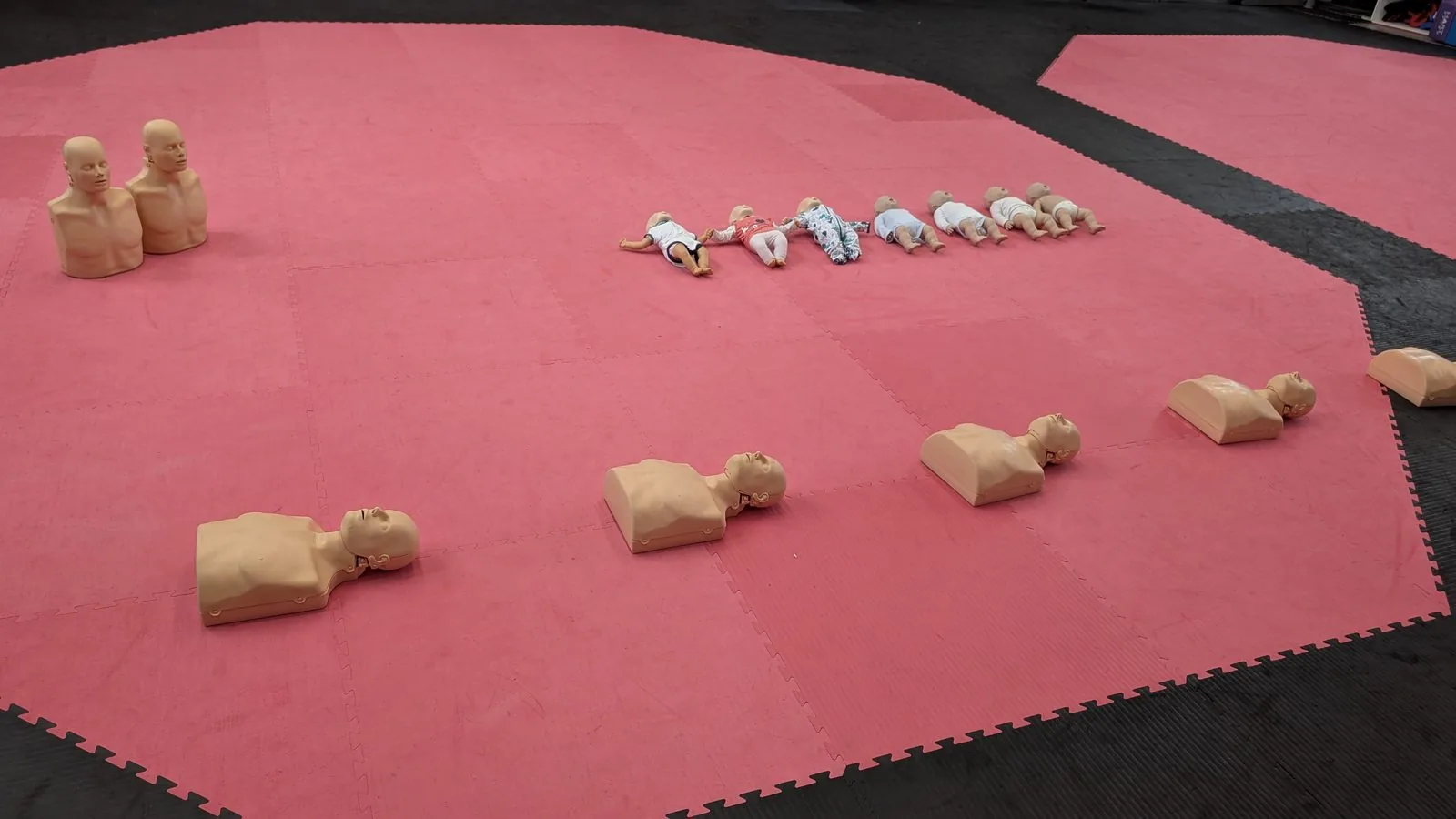
If you're a designated workplace first aider, an early childhood educator, a sport coach, or anyone whose role expects them to handle a medical emergency, your certificate has an expiry date. Two expiry dates, actually, and they're often confused.
Here's the quick reference, then the detail.
The short version
- HLTAID009 - Provide cardiopulmonary resuscitation: refresh every 12 months
- HLTAID011 - Provide First Aid: full refresh every 3 years, with CPR refreshed annually
Why two different cycles?
CPR skills decay quickly without practice. Compression depth, rhythm, hand placement, and rescue breathing technique are all things you lose confidence in if you haven't done them for a year. That's why the recommendation across Australia is an annual CPR refresh, to make sure the muscle memory is still there when you need it.
The broader first aid skill set, wound management, asthma response, anaphylaxis, burns, fractures, envenomation, is a larger body of knowledge that's reasonable to refresh every three years. That's the HLTAID011 cycle.
What "valid" actually means
A nationally recognised first aid Statement of Attainment doesn't formally "expire", once you've passed the assessment, you have the qualification. What expires is your currency: the expectation that your skills are still up to date and aligned with current first aid protocols.
Practically:
- Workplaces, sporting bodies, and education providers require your CPR currency to be no more than 12 months old, and your full first aid currency to be no more than 3 years old.
- If you completed HLTAID011 two years ago, you're still considered current for first aid, but you'll need to refresh your CPR (HLTAID009) within the year mark to remain workplace-compliant.
- If your three-year first aid window has passed, you need to redo HLTAID011 in full. There's no half-refresh option for the broader first aid course.
What's required in your workplace
Australian WHS regulations require employers to ensure that "first aid is administered to an injured or ill worker by a suitably trained person." What "suitably trained" looks like depends on:
- The nature of the work (an office vs a construction site vs a remote camp)
- The size and layout of the workplace
- The proximity to emergency services
Safe Work Australia's First aid in the workplace Code of Practice is the authoritative guide. Most workplaces interpret it as: at least one HLTAID011-current first aider, with the number scaling with workforce size and risk profile.
Some industries have additional requirements:
- Education and care settings (childcare, OSHC) often require HLTAID012, plus separate asthma and anaphylaxis training. Check your state-specific ACECQA requirements.
- Aquatic and high-risk industries often require HLTAID015 - Provide advanced resuscitation and oxygen therapy.
Apex currently delivers HLTAID009 and HLTAID011 under our scope. If you need one of the other units, we can refer you to a partner RTO.
What if your certificate has already lapsed?
You're not in trouble, but you should refresh as soon as possible if your role requires it. Two scenarios:
- CPR lapsed (within 3 years of full first aid): book an HLTAID009 refresh. It's typically a half-day session.
- Full first aid lapsed (more than 3 years since last HLTAID011): book a full HLTAID011. You'll also receive current CPR as part of it.
Planning ahead
The easiest way to stay current is to put your CPR refresh on the same month every year, your birthday month is a popular trick. Then schedule your three-year HLTAID011 refresh to land on the same anniversary.
If you're managing a team of first aiders, ask us about group bookings. We can run a session on-site at your workplace and refresh everyone at once.