
What the Latrobe Health charges mean for every workplace
WorkSafe Victoria has charged Latrobe Regional Health with three breaches of the Occupational Health and Safety Act after a nurse was seriously assaulted by a patient with a documented history of violence. The case is a sharp reminder of what employer duty of care looks like in practice.
Source: WorkSafe Victoria, Health provider charged after patient assaults nurse (22 May 2026).
In November 2024, a nurse at a Traralgon hospital operated by Latrobe Regional Health was seriously assaulted by a patient. The patient had a documented history of violence and aggression. Eighteen months later, WorkSafe Victoria has laid three charges against the health service under section 21 of the Victorian Occupational Health and Safety Act 2004.
The case is listed for first mention at the Latrobe Valley Magistrates' Court on 1 July 2026. But the lessons don't have to wait for a verdict, and they don't only apply to healthcare.
The three alleged failures
WorkSafe's charges sit under section 21 of the Act, which requires every employer to provide and maintain a working environment that is, so far as reasonably practicable, safe and without risks to health.
The three specific allegations are:
- Failing to maintain a system for recording patient histories of violence and aggression, and using that information to apply risk management strategies, alleged breach of section 21(2)(a).
- Failing to provide mobile or personal duress alarms to staff who could be reasonably expected to face aggression, alleged breach of section 21(2)(a).
- Failing to provide information to staff about the locations of fixed duress alarms, alleged breach of section 21(2)(e).
Put plainly: know the risk, control the risk, tell people about the controls. Three things that sound obvious until an organisation is alleged to have done none of them adequately.
Why this matters beyond healthcare
It would be easy to read this as a hospital story. It isn't. The same section of the OHS Act applies to every Victorian employer, and the underlying duty applies, in equivalent form, under every Australian state and territory's WHS legislation.
Any workplace where staff interact with people who might become aggressive carries the same kind of risk. Schools, retail counters, customer service centres, security roles, community services, sport and recreation venues, hospitality, transport, libraries, the list is long.
The pattern WorkSafe is alleging, risk known, controls inadequate, information missing, is one most workplaces would do well to audit themselves against.
Four practical questions for any employer
- Do you have a system for capturing risk history? Not anecdotal, documented. Incident logs, behaviour-of-concern records, prior interaction notes that travel with the file rather than living in someone's memory.
- Are your controls matched to the risk? A fixed duress alarm at reception doesn't help a staff member working alone in a back office. A risk-rated approach asks: where can aggression happen, and what control is available at that location?
- Does your team actually know what controls exist? Information is itself a control under the OHS Act. Locations of alarms, escalation pathways, who to call, when to leave, these need to be known, not assumed.
- Are your psychosocial obligations covered? Patient/customer aggression is a recognised psychosocial hazard under Safe Work Australia's Code of Practice on Managing Psychosocial Hazards at Work. Physical safety controls are the floor, not the ceiling.
The psychosocial layer
Workplace violence prevention used to be discussed almost entirely in physical-safety terms, alarms, training, security. The 2025 psychosocial regulations make clear that the harm extends beyond the assault itself. Workers regularly exposed to aggression or the credible threat of it carry psychological load even when no incident occurs.
For employers, this means duty of care now extends to:
- Recognising patient/customer aggression as a psychosocial hazard, not just a physical one
- Designing work so that high-risk interactions are managed (e.g. two-up staffing, environmental controls, escalation procedures)
- Providing genuine post-incident support, not a single phone call, but a process
- Reviewing whether the risk has changed over time, and adjusting controls accordingly
What good practice looks like
From the workplaces that handle this well, three things stand out:
- Risk information is captured and shared. A documented history of aggression follows the file, not just the original team member's recollection.
- Controls match the work environment. Staff working alone or in back-of-house roles have access to mobile duress alarms; staff at fixed counters know exactly where the fixed alarms are; everyone knows the verbal de-escalation playbook before things escalate.
- Leaders treat post-incident response as part of safety, not as HR. A serious assault triggers reporting, support, investigation, and review, not just a 'how are you' check-in.
Where Apex fits
If this case has prompted you to review your own workplace, our Health, Safety & Wellbeing programs cover this directly:
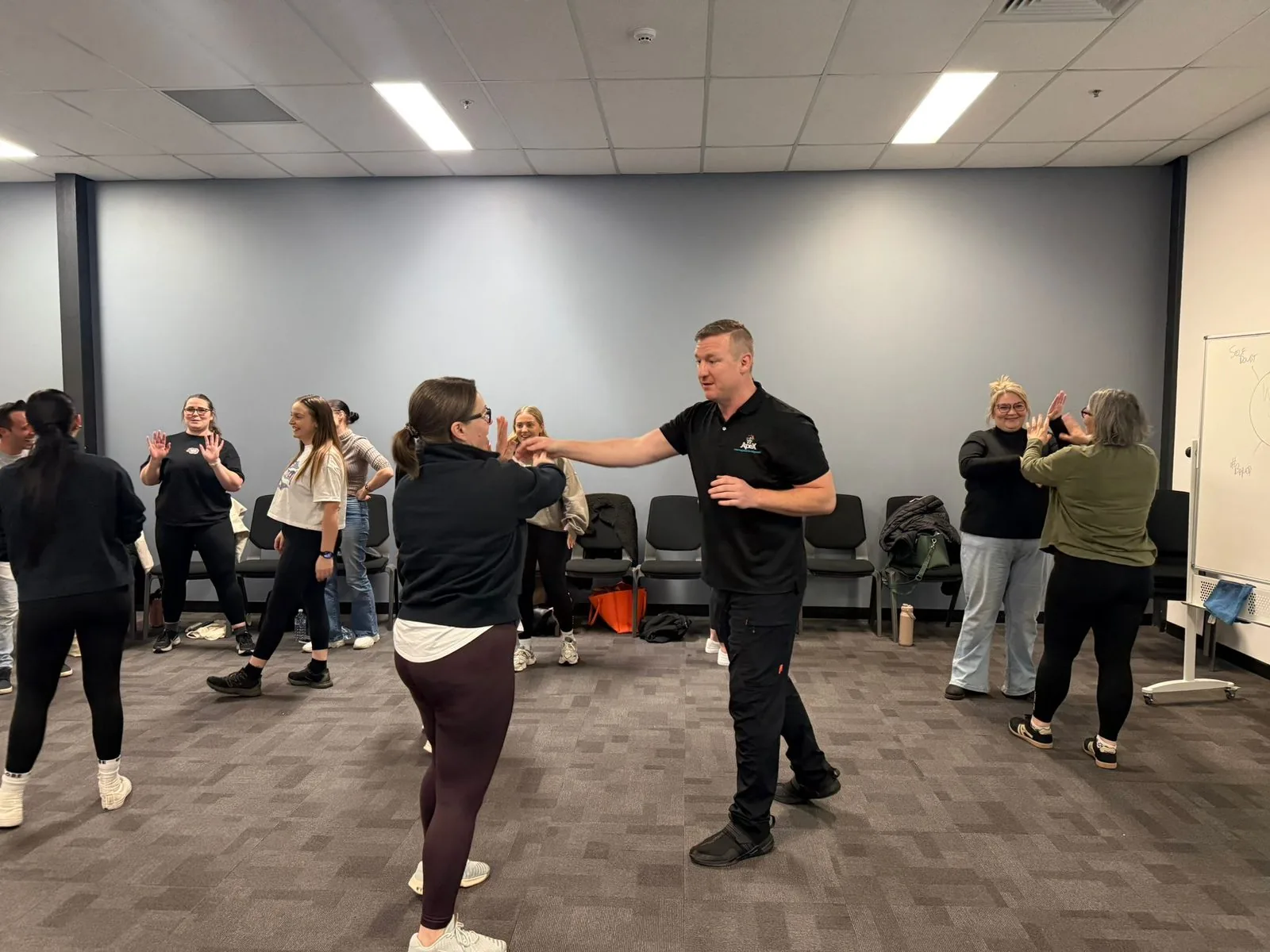
- Personal Safety Program (PSP), practical training for frontline workers in awareness, de-escalation, and proportionate response. Designed for the actual situations workers face, not theoretical scenarios.
- Psychosocial Safety Leadership, for managers needing to lead in line with the 2025 psychosocial obligations, including managing workplace aggression as a psychosocial hazard.
- HLTWHS001 - Participate in workplace health and safety, nationally recognised foundational WHS unit covering hazard identification, risk control, and incident reporting.
None of these are a substitute for the systems-level work an employer needs to do, alarms, recording protocols, environmental design, post-incident processes. But training is part of the package, and the right training closes gaps that systems alone can't.
Get in touch if you want to talk through what fits your workplace.
Further reading: WorkSafe Victoria's full release · WorkSafe Victoria · Safe Work Australia, Psychosocial Hazards