A team day that leaves people safer
End-of-year team days are being booked now. Here is the case for spending yours on something your people will still be using in March.
Somewhere in your organisation, someone is booking the end-of-year team day right now.
It will probably be fine. An escape room, a cooking class, a long lunch. People will enjoy it, take a few photos, and by the second week of January nobody will be able to say what changed. That is not a criticism of team days. It is just what most of them are for.
Here is a different way to spend the same half day.
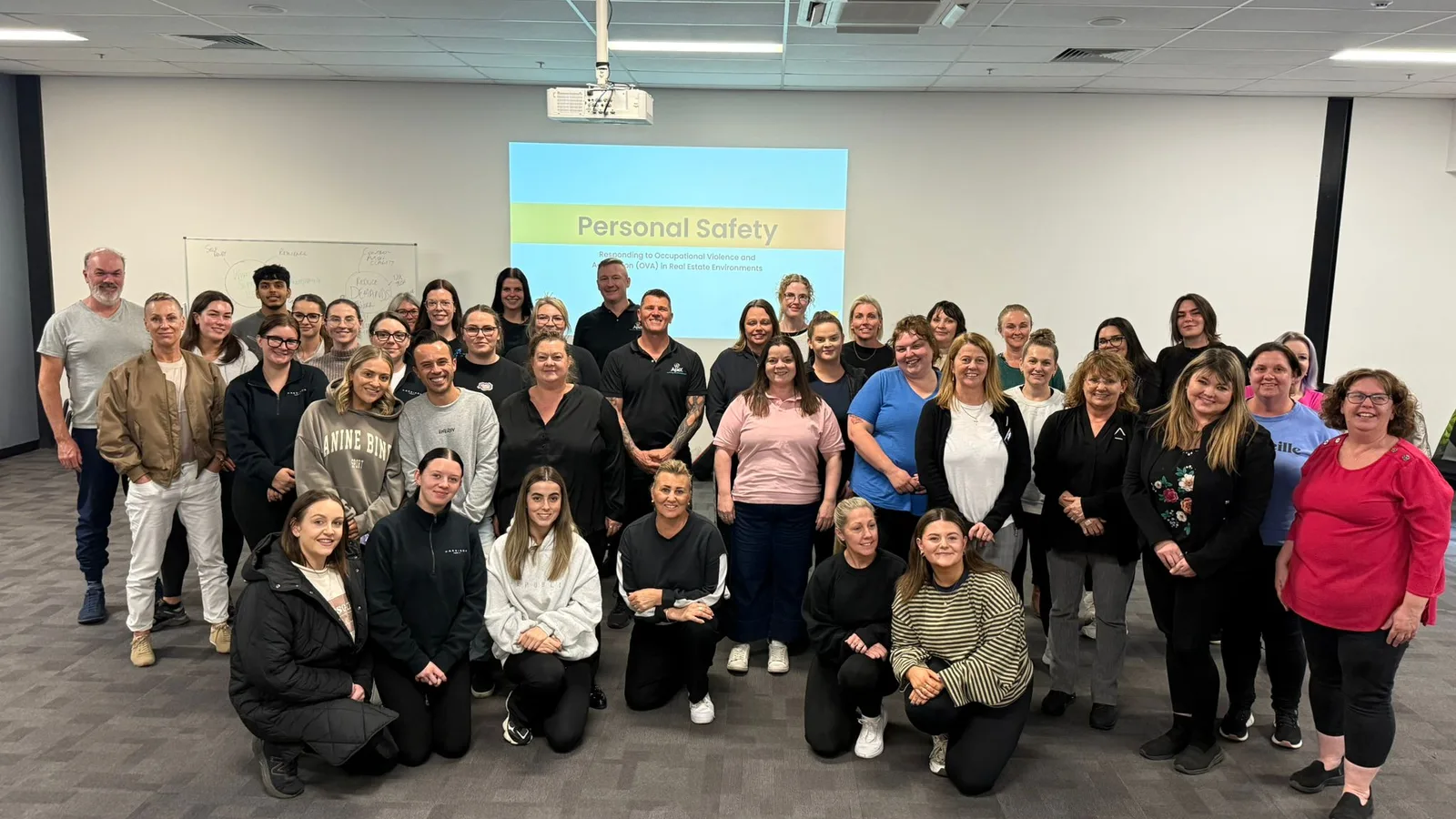
The room looks like a team day
Walk into a Personal Safety Program workshop and it looks like every good team day you have been to. People are out of their chairs and in pairs. Somebody has just laughed out loud because their colleague got the wrist release right on the third go. The trainer is in the middle of the room, not behind a lectern.
The difference is what everyone is practising. Reading a situation early. Holding a professional boundary with their words, their tone and their body. Creating distance. Getting out. Protecting themselves if it comes to that, and only then.
These are the skills that matter on the day a customer, a client, a tenant or a patient stops being reasonable. Occupational violence and aggression is a recognised psychosocial hazard, and clients and customers, not colleagues, are the most common source of it. The threat walks in through the front door. The protection is the people already in the room.
Why doing it together matters
You can send one person to a course. What you cannot do is send one person to build a shared plan.
When a whole team goes through the program on the same day, they leave with the same language for escalation, the same understanding of when to disengage, and the same expectation that safety comes before the transaction. The receptionist knows what the case worker will do. The case worker knows the receptionist has their back. That shared plan is a control in its own right, and it does not exist until the team builds it together.
There is a quieter benefit too. Practising something slightly uncomfortable alongside your colleagues, and getting it wrong in front of them, and laughing, and trying again, builds the kind of trust that a trust exercise never quite reaches. People remember who they practised with.
Built around your workplace, not a script
There is no generic version of this. The situations a property manager faces at a vacant house are not the ones a support worker faces on a home visit or a school office faces at pick-up time. So we build the program around your team, your settings and the situations they genuinely encounter. Every module includes practical work, and every module closes with a reflection on what to take back to the job.
Delivery is on site and practitioner-led: half a day as standard, or a full day with more scenario practice. About half the session is hands-on: de-escalation role-play and physical drills in pairs. That practice is what the program is for. Physical skills are taught only as a last resort, within the law on self-defence: force that is a reasonable response to the threat as you perceive it.
The Personal Safety Program is a non-accredited professional development program delivered by Apex Learning and Development, RTO 46324. Participants receive an Apex Certificate of Attendance.
The case for this one
Your team will still get the day out of the office. They will still eat together. They will still go home with the stories.
They will also go home knowing what to do on the worst afternoon of next year, and knowing that the person at the next desk knows it too.
Talk to us about a team day for your people. Tell us your team size and your setting, and we will build it around you.
Source for the statistic: Safe Work Australia, Workplace and work-related violence and aggression in Australia, 2024.
The Personal Safety Program is a non-accredited professional development program. It is not nationally recognised training and does not lead to a qualification or statement of attainment.