After the incident, the team is the first responder
Fewer than half of workplace violence incidents are ever reported. That does not change with a better form. It changes with a team that knows the ten minutes after.
Over ten years, the ABS Personal Safety Survey recorded 176,100 incidents of workplace violence in Australia. Fewer than half were formally reported.
Every organisation reads that number as a reporting problem and reaches for a better form. It is not a reporting problem. It is a ten-minutes-after problem.
What actually happens in the ten minutes after
A worker has just been abused, threatened or shoved. Their heart rate is still up. They are embarrassed, or angry, or shaking, and they are usually back at their desk or in their car before anyone has said a word to them.
If the first thing that happens is nothing, the incident becomes something they carry privately. If the first thing that happens is a colleague who says "sit down, I have got the desk, tell me what happened", it becomes something the team knows about. Reporting follows from that. It does not precede it.
That is why the Personal Safety Program treats the debrief as a skill the whole team practises, not an admin step for the person it happened to.
The team is the first responder
Long before an incident reaches a manager, a form or a regulator, it reaches the people standing nearest. What they do in that window decides most of what follows:
- Whether the person is safe now. Is the aggressor gone? Does anyone else need to be moved?
- Whether the person is looked after. Water, a chair, someone to sit with them. Nobody drives while still shaking.
- Whether it gets written down. The colleague who says "let's do the report together now, while it is fresh" gets a report. The one who says "make sure you log that" usually does not.
- Whether it gets followed up. What changed? Was the control reviewed? Did anyone tell the person what happened next?
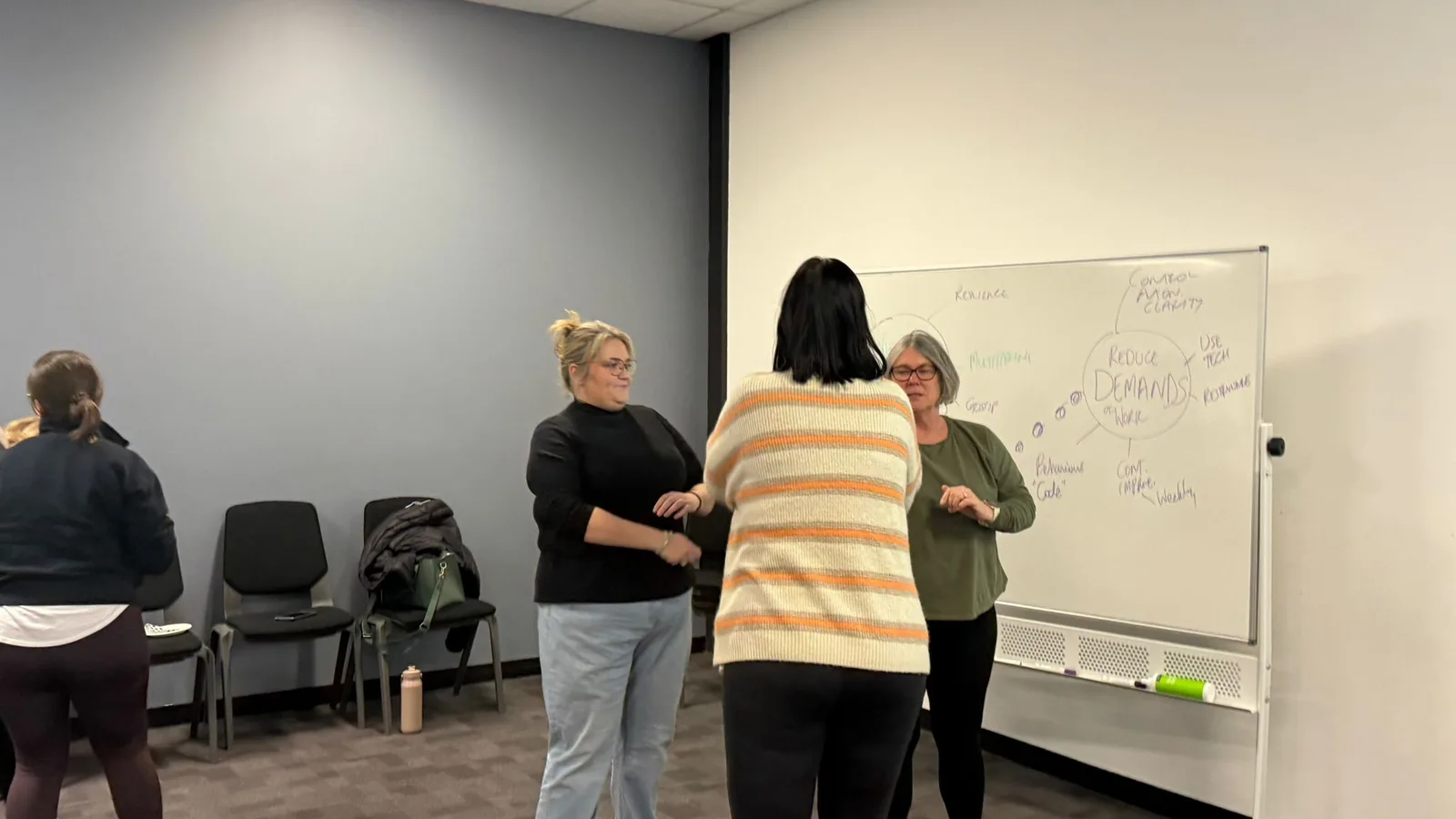
None of that is complicated. All of it has to be agreed before the day, which is what the program's closing module is for. Teams practise a plain-language check-in, they rehearse who covers what, and they talk about self-care and recovery honestly, because staying safe at work is about more than the moment of an incident.
Why this belongs in a compliance conversation
Occupational violence and aggression is a recognised psychosocial hazard. That puts the same obligation on an employer as any other hazard: identify it, assess it, control it and review the controls. A register that sees fewer than half of what happens cannot support any of those steps.
A team that debriefs every time, and reports as a normal part of the debrief, gives the organisation a true picture of its risk. It also protects the people in it, because "it is just part of the job" stops being the only answer available.
Practised, not policied
You can write a post-incident procedure in an afternoon. What you cannot write is a team's reflex to use it. That comes from having practised it, with each other, in a room where nobody is actually hurt yet.
The Personal Safety Program is a non-accredited professional development program delivered on site by Apex Learning and Development, RTO 46324. It is built around your workplace and your team, and every module closes with a reflection on what to take back to the job. Participants receive an Apex Certificate of Attendance.
Talk to us about your team. The ten minutes after is where we start.
Source for the statistic: ABS Personal Safety Survey, via Safe Work Australia, Workplace and work-related violence and aggression in Australia, 2024.
The Personal Safety Program is a non-accredited professional development program. It is not nationally recognised training and does not lead to a qualification or statement of attainment.