
"Just stay calm" is not a strategy: rethinking aggression on your front line
Occupational violence and aggression is a recognised psychosocial hazard, not a personality test for your staff. Here's what preparation actually changes.
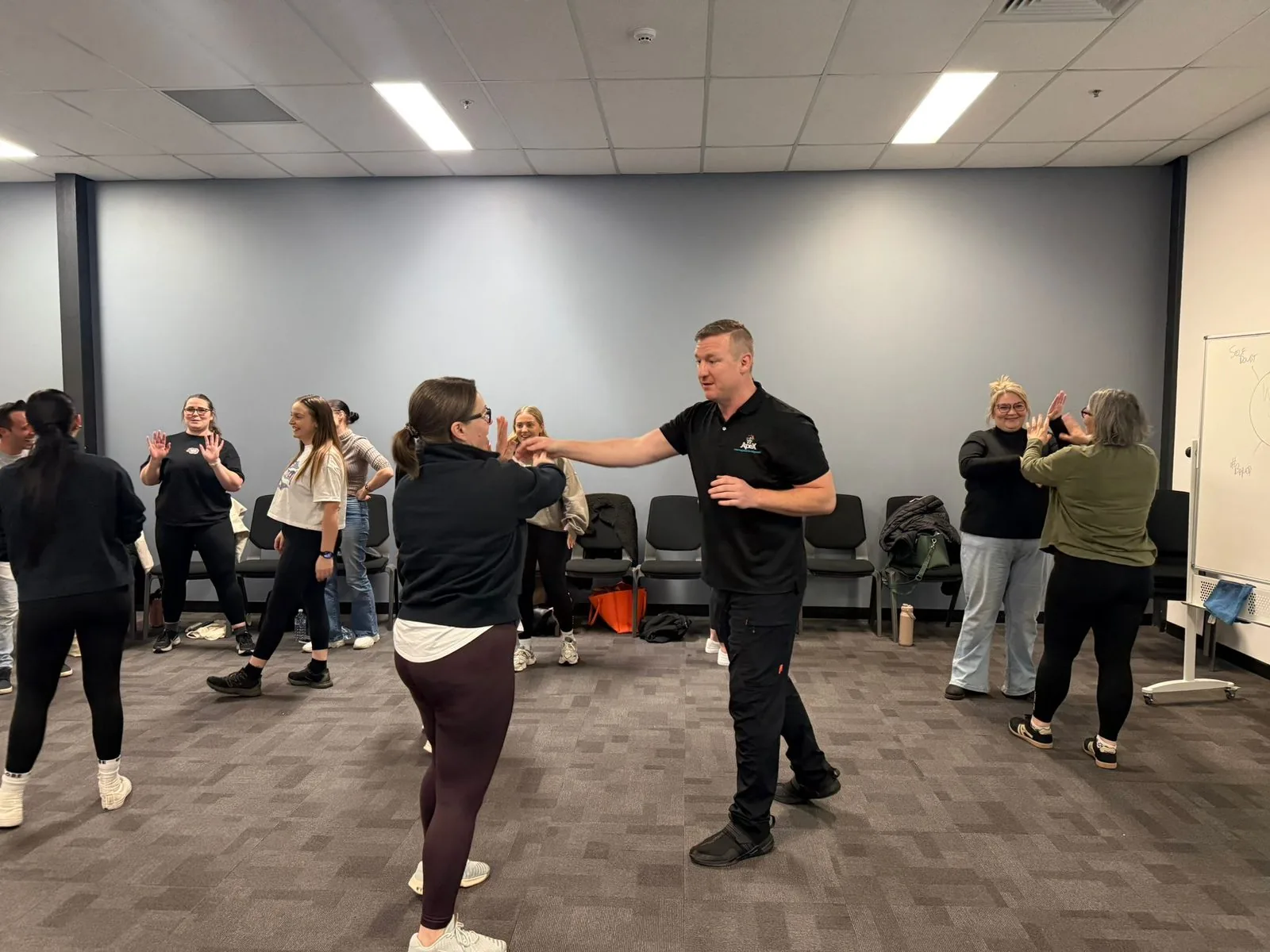
For a lot of workers, aggression from a customer is not a rare event. It is Tuesday.
The receptionist who absorbs the abuse when a booking goes wrong. The support worker managing someone in crisis. The retail team on the receiving end of a bad day that is not theirs. The nurse who is assaulted by a patient and is expected to be back on the floor an hour later.
And the advice these workers are usually given amounts to a poster on the wall and a hope that it does not escalate.
Aggression is a hazard, not a character test
Here is the reframe that changes everything: occupational violence and aggression is a recognised psychosocial hazard. It belongs in the same conversation as any other risk to worker health and safety, with the same obligation on the employer to identify it, assess it, and do something about it.
That matters because of how most workplaces currently handle it, which is to treat it as a personality test for individual staff. The calm ones cope. The ones who struggle are quietly seen as not cut out for it. People are left to absorb the harm privately, and the good ones burn out and leave.
Treating a systemic hazard as an individual failing is not just unfair. It is how you lose your best people and miss your actual legal and moral obligations at the same time.
What preparation actually changes
"Just stay calm" fails because it asks for an outcome without teaching the skill. Calm under pressure is not a temperament. It is a set of learnable capabilities:
- Reading escalation before it peaks, so you are responding early instead of reacting late.
- Holding a boundary clearly and without provocation, which is a specific verbal and physical skill, not a tone of voice.
- De-escalating without freezing, because the freeze response is what most untrained people actually do, and it can be trained out.
- Knowing when to disengage, and having permission to, so safety comes before the transaction.
These are practical, repeatable, and they hold up far better when they have been learned from someone who has stood in that room, rather than read from a manual.
Why the practitioner difference matters here
You cannot teach this from theory alone. The room knows the difference between someone explaining de-escalation and someone who has actually done it under real pressure. Apex facilitators are practitioners first. That is the whole point: the skills stick because they come from lived experience, told to the people who need to hear it.
Build it around your actual risks
There is no generic version of this that works. The risks a community services team faces are not the risks a retail floor faces. So we build it around your workplace, your front line, and the situations your people genuinely encounter.
We run this as a non-accredited professional development program, customised to your organisation.
If aggression is part of your team's working week, it is worth treating it as the hazard it is.
Let's talk about what your team is facing. Apex Learning and Development, RTO 46324.
This is a non-accredited professional development program. It is not nationally recognised training and does not lead to a qualification or statement of attainment.