Twenty three point nine years: what child safety asks of ordinary adults
National Child Protection Week runs 6 to 12 September. Child safety is decided by ordinary adults in ordinary moments, not by the policy on the shelf.
National Child Protection Week runs from 6 to 12 September. The theme this year is "Every Conversation Matters: Shifting Conversation to Action", and there is one number that explains why the wording is about conversations rather than compliance.
Survivors who spoke to the Royal Commission into Institutional Responses to Child Sexual Abuse took, on average, 23.9 years to tell anyone.
What that number is actually measuring
It is tempting to read it as a statement about children: that they stay silent for a very long time. That is not quite what it says.
Every one of the organisations involved had a policy. Most had a reporting line. What decided whether a child spoke was almost never the document. It was whether there was an adult nearby who noticed something, was not afraid of being wrong, and responded in a way that kept the door open rather than closing it.
Read that way, 23.9 years is not a measure of how long children stay silent. It is a measure of how long it takes to find someone safe.
The scale is closer than most organisations assume
In 2024-25, around one in every 42 Australian children under 18 came into contact with the child protection system. That is roughly 137,000 children.
Those children are not somewhere else, being handled by specialists. They are at Saturday morning training, in the holiday program, in the waiting room, at the club. And the adult they encounter is not a child protection expert. It is whoever was rostered on.
In Victoria alone, the Commission for Children and Young People received 2,232 notifications of reportable allegations about workers and volunteers in a single year. Thirty-six per cent were substantiated.
What safeguarding training is actually for
Not to turn a volunteer into an investigator. That is the wrong job and the wrong expectation.
The purpose is narrower and more useful: to make sure the person who is actually present can do four things.
- Recognise what they are seeing, including the indicators that are easy to explain away.
- Know their obligations, specifically what must be reported, to whom, and how quickly.
- Respond well in the first thirty seconds, without promising confidentiality that cannot be kept and without asking the kind of leading questions that damage a later process.
- Escalate to someone who can act, and follow up rather than assume it was handled.
That is a short list, and none of it is intuitive. Most people who work or volunteer with children have never been walked through any of it.
A policy nobody can describe is not a control
This is the honest test, and it is worth applying during Child Protection Week rather than at an audit.
Could the people on the ground this Saturday tell you what to do, without looking it up?
If your answer depends on someone finding a document, then what you have is a document. A control is something the people present can actually perform under pressure.
The other half of the story
Child safety is not only about response. It is about the conditions that make disclosure possible: adults who are present and attentive, environments where children are believed, and organisations where raising a concern about a colleague is survivable.
That is culture rather than paperwork, and culture is built by the ordinary conversations the theme is pointing at.
Where we fit
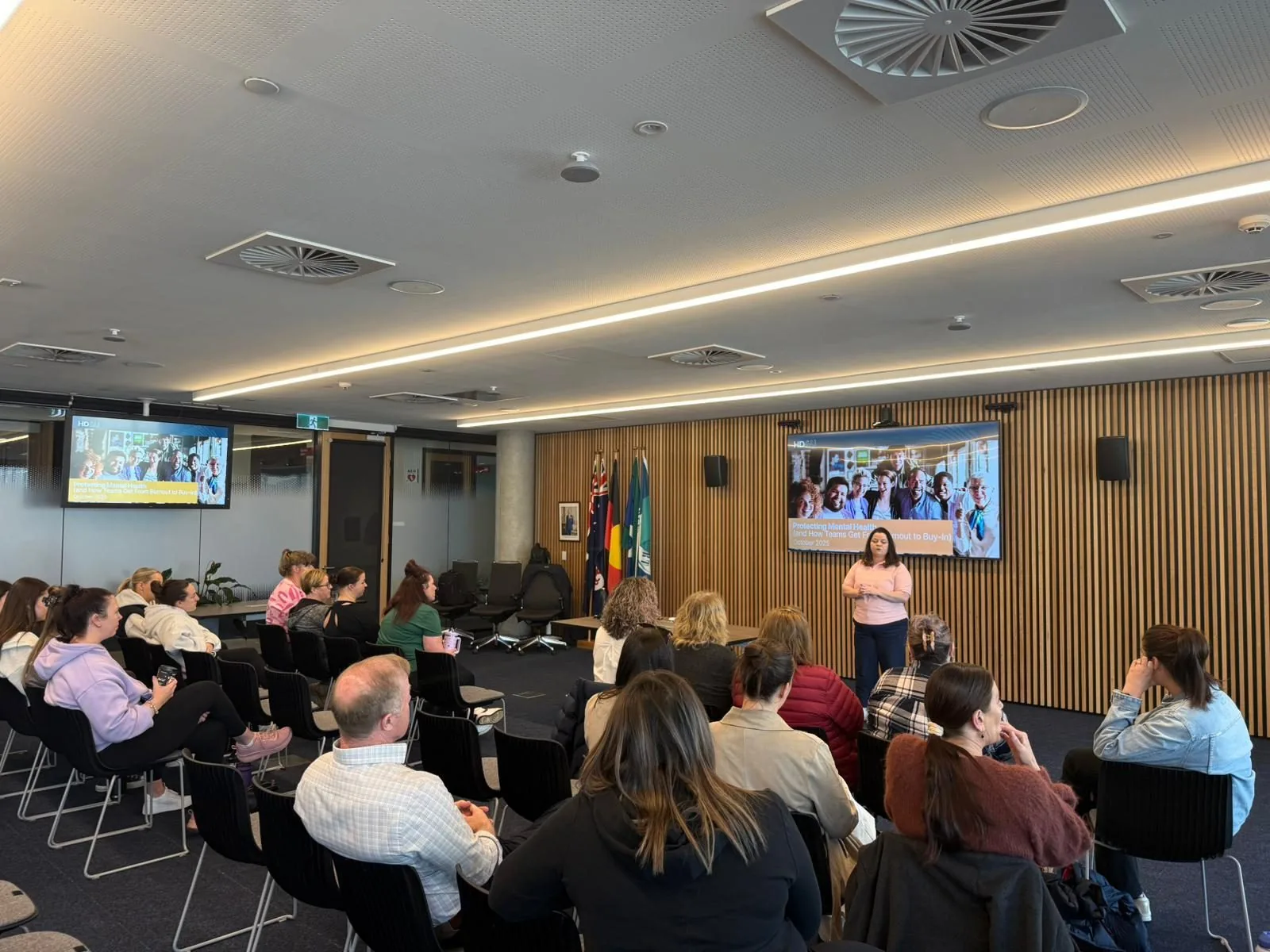
We run safeguarding and child safe standards workshops as non-accredited professional development programs, for organisations and for community sport, built around the settings your people actually work in. For clubs and coaching organisations, SISXIND010 Protect children and young people is also available as nationally recognised training.
If Child Protection Week is a prompt to check whether your people are genuinely ready, let's talk about what they need.
Apex Learning and Development, RTO 46324.
Sources: Royal Commission into Institutional Responses to Child Sexual Abuse, Final Report Volume 4, 2017. Australian Institute of Health and Welfare, Child protection Australia 2024-25. Commission for Children and Young People (Victoria), Annual Report 2024-25. National Association for Prevention of Child Abuse and Neglect, National Child Protection Week 2026.
Apex safeguarding and child safe standards workshops are non-accredited professional development programs. They are not nationally recognised training and do not lead to a qualification, a unit of competency or a statement of attainment. SISXIND010 Protect children and young people is a separate nationally recognised unit.