
Aggression at the counter and in the field: what a council front-line team can practise
Council front-line staff meet the public on its good days and its worst. Here is what a team can practise together, at the counter and in the field.
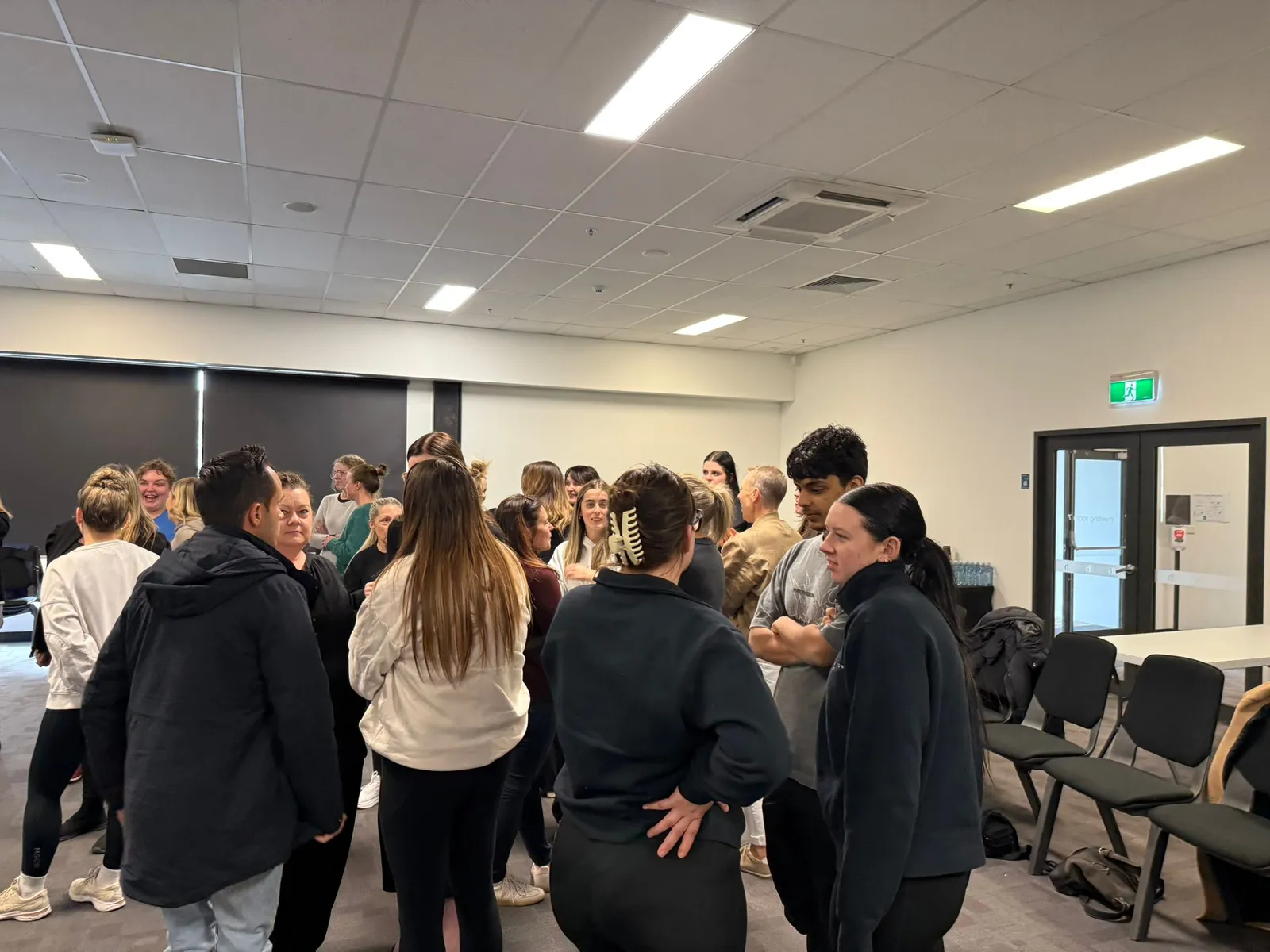
Most of a council's contact with its community happens at a counter, on a phone line, at a library desk or on a doorstep. Most of those conversations are fine. Some are not: a rates notice nobody expected, a parking fine, a pet that has been impounded, a permit that has been refused.
Safe Work Australia found that clients and customers were the most common source of work-related violence. For a council, the clients and customers are the community, and the people who meet them first are the front-line team.
Where it happens
Every council is different, but the settings are familiar:
- The customer service counter. Long waits, bad news and a queue watching.
- Libraries and community centres. Open doors, long hours and staff who are often on their own at opening or closing.
- Field and compliance work. Local laws, parking, animal management, building and planning inspections, often alone and away from the office.
- The phone and online. Abuse does not need a counter.
What a team can practise
Knowing about aggression is not the same as having practised what to do about it. These are the things a front-line team can practise together.
- Reading the space. Where the exits are, where someone could be blocked in, what could be picked up. A counter, an interview room and a front yard each look different with fresh eyes.
- A plan for every visit. Where you will be, who you are meeting, how long it should take, and who knows. For field staff, that last question is the one that matters most.
- Hearing escalation early. The verbal, body-language and behavioural cues that come before aggression, and the triggers behind them.
- Calming things down. Listening, acknowledging how someone feels without accepting the behaviour, offering choices, setting a boundary, redirecting. It sounds simple written down. It is harder with someone shouting at you, so it is worth practising in role-play built on the team's own situations.
- Leaving, and getting help. When and how to end an interaction and walk out, how to put distance between you and the other person, and how to give clear information to Triple Zero (000).
- A last resort. Simple ways to break free, create space and protect yourself, taught strictly as a last resort when you cannot get away. Physical skills are taught only within the law on self-defence: force that is a reasonable response to the threat as you perceive it.
Why practise it as a team
A plan only holds if the people around you share it. When the whole team uses the same cues, the same words and the same plan, the colleague at the next counter knows when to step in, and the person in the field knows someone is expecting their call.
Training is one part of managing the risk, alongside how the work is designed: counter layout, staffing at opening and closing, check-in systems for field staff, and clear reporting. This is general information, not legal advice. Your state or territory work health and safety regulator is the place for advice about your workplace.
Where Apex fits
Apex runs the Personal Safety Program on site, built around the places your team actually works. Before the session we ask where your people go, who they deal with and what has happened before, and the examples and role-plays are built around that. About half the session is hands-on. Drills start with a safety brief, and every drill is adjusted to the person, with a hands-off version.
It runs as a half day or a full day at your workplace. We have run this program for teams across the country.
The Personal Safety Program is a non-accredited professional development program delivered by Apex Learning and Development, RTO 46324. It is not nationally recognised training and does not lead to a qualification or statement of attainment.
Call or email us now: Allan on 0433 895 537 or info@apexld.edu.au
Source: Safe Work Australia, Workplace and work-related violence and aggression in Australia, August 2024.
The Personal Safety Program is a non-accredited professional development program. It is not nationally recognised training and does not lead to a qualification or statement of attainment.